by Mia Ilavska
October 6, 2026
Smart Parking vs Traditional Parking Meters: What Actually Changes
A parking meter sees payment; a sensor sees reality: occupancy, overstays and turnover. Here is what a city gains by measuring occupancy on top of payment, and why the two work best together.
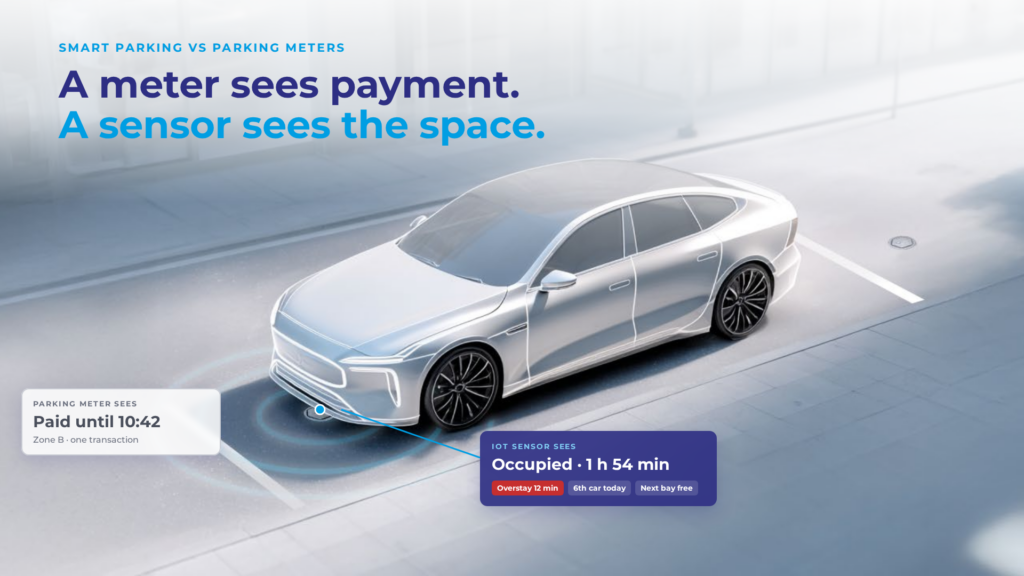
Table of content
What a parking meter measures
A parking meter measures payment, and only payment. It records that a transaction happened for a zone or a bay, which is useful for revenue but blind to reality on the street. A meter cannot tell you whether the paid space is actually occupied, whether a car overstayed its paid time, or whether the space next to it is empty. It also cannot detect a vehicle that simply never paid.
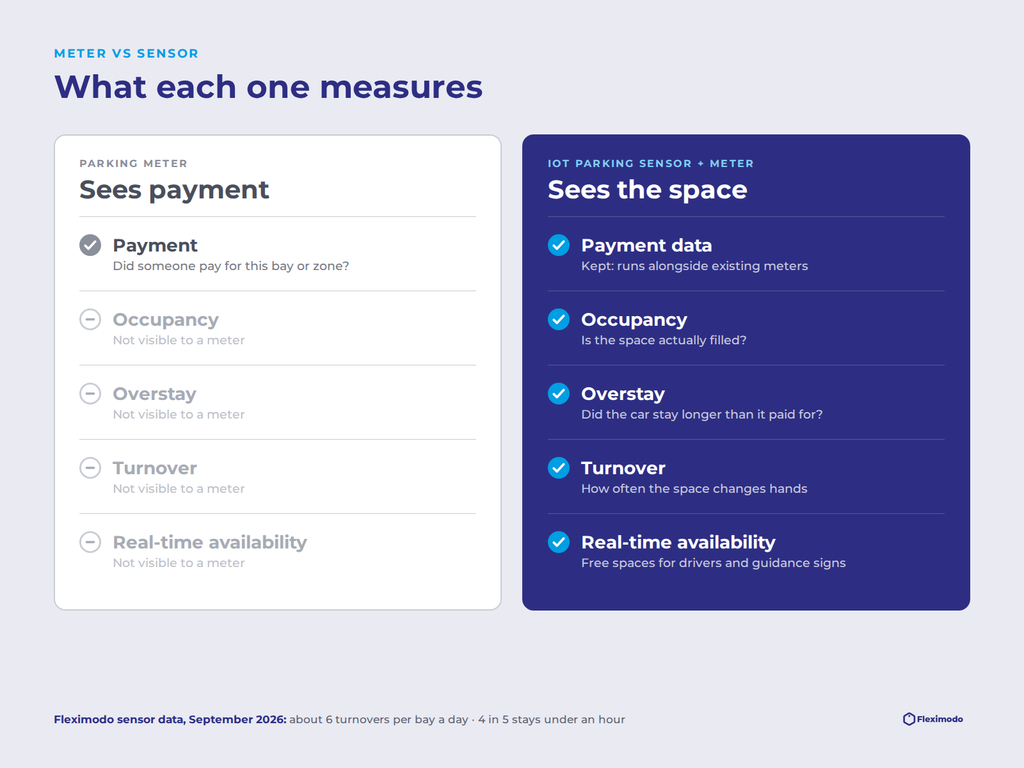
That blindness is the core limitation. Revenue can look healthy while a third of vehicles pay nothing, because the meter only ever sees the payers.
What a sensor adds
A parking sensor measures occupancy: whether each space is filled, for how long, and how often it turns over, at 99.96 percent accuracy. Add that to meter payment data and three new things become possible. First, real-time availability for drivers and guidance signs. Second, enforcement, because the system can compare occupancy against payment and permits and flag non-compliance. Third, analytics: turnover, dwell time, and peak demand for pricing and planning.
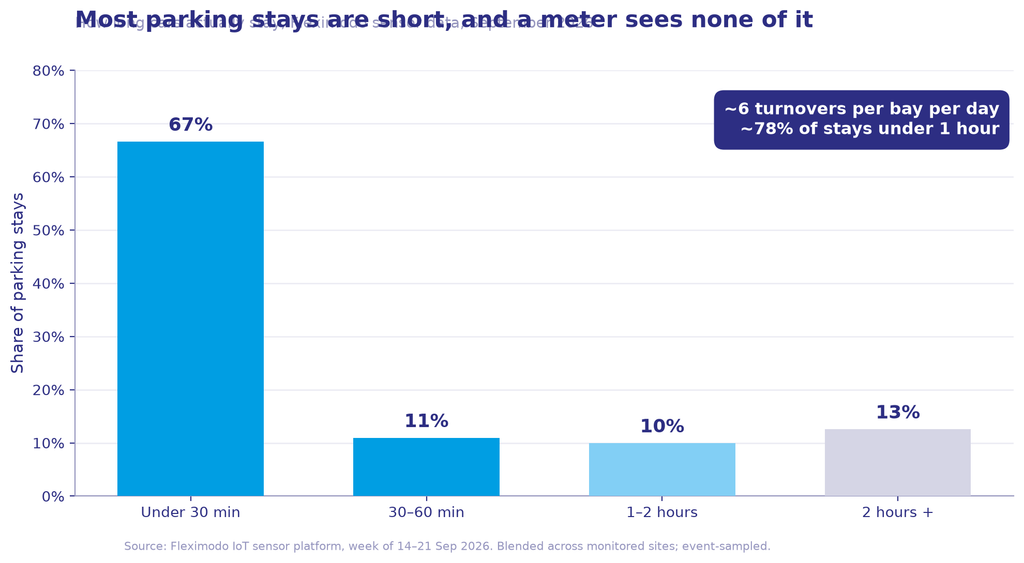
This is not theory for us; it is what our own sensors record. Across the Fleximodo bays reporting in one week of September 2026, each monitored space turned over about six times a day, and nearly four in five stays lasted under an hour. A payment meter sees none of that. It logs a transaction and stops there, while the sensor shows the actual rhythm of the space: how often it changes hands and how long each car really stays.
In other words, smart parking vs parking meters comes down to two questions: the meter answers "did they pay?" and the sensor answers "is the space actually being used correctly?" Together they close the loop.
Smart parking vs parking meters: what changes for a city
Adding sensors changes parking from a payment system into a managed system. Drivers spend less time cruising for parking because availability is visible. Enforcement gets targeted, so the same officer hours catch more and collect more. Overstays are a good example: the system compares how long a car has actually occupied the bay against the time it paid for, and flags the gap, something a meter can never do on its own. And compliance rises, which lifts revenue without raising prices. Pardubice grew parking revenue 74 percent with zero tariff increases, driven by occupancy-based enforcement layered on top of payment.
Cities do not always rip out meters to do this. Sensors commonly run alongside existing payment infrastructure, adding the occupancy layer that meters never had. See how it works at city scale on our municipal parking page.
FAQ
What is the difference between smart parking and a parking meter?
A parking meter records payment for a space or zone. Smart parking adds an IoT sensor that measures whether the space is actually occupied, for how long, and whether the occupant is compliant. Meters see payment; sensors see reality. Used together, they enable availability, enforcement, and analytics.
Do smart parking sensors replace parking meters?
Not necessarily. Sensors usually run alongside existing meters and payment apps, adding the occupancy and enforcement layer meters lack. A city keeps collecting payment while gaining real-time availability and compliance data.
Can a parking meter detect if a space is occupied?
No. A meter only records payment transactions. It cannot tell whether the paid space is occupied, whether a car overstayed, or whether a non-paying vehicle is parked there. That requires an occupancy sensor.
How often does a parking space actually turn over?
More than most cities assume. In Fleximodo's own September 2026 data, each monitored bay changed occupant about six times a day, and nearly four in five stays were under an hour. A payment meter cannot see this rhythm; an occupancy sensor records every arrival and departure.
How does adding sensors increase parking revenue?
Sensors let a city enforce against actual occupancy, catching overstays and non-payment that meters miss. Better compliance collects revenue already owed, without raising prices. Pardubice grew revenue 74 percent this way, with zero tariff increases.
Are parking sensors better than smart meters?
They do different jobs. Smart meters modernize payment; sensors measure occupancy and enable enforcement, guidance, and analytics. The strongest systems combine payment data with sensor occupancy data rather than choosing one.
