by Mia Ilavska
October 11, 2024
Hospital Parking Case Study: How SSMC Abu Dhabi Digitalized 400,000 m²

Table of content
The client's profile
Sheikh Shakhbout Medical City (SSMC) is a prominent healthcare facility located in Abu Dhabi, United Arab Emirates. As part of the Abu Dhabi Health Services Company (SEHA), SSMC plays a crucial role in delivering comprehensive healthcare services to the region. SSMC is situated in the capital city of Abu Dhabi, which is known for its modern infrastructure and rapid development. The facility spans over 400,000 square meters, making it one of the largest hospitals in the UAE. Abu Dhabi has a population of approximately 1.5 million residents, with SSMC catering to both local citizens and expatriates, thus addressing a diverse demographic's healthcare needs.

The challenge of hospital parking
SSMC is one of the largest hospitals in the United Arab Emirates, and it is part of Abu Dhabi Health Services Company (SEHA). Because the campus serves patients, visitors, and thousands of staff in a city of around 1.5 million people, demand is constant and it peaks hard. Three problems stood out.
- Slow parking searches. Patients and visitors lost time circling for a free space, exactly when they could least afford it.
- Peak-hour scarcity. Availability collapsed at busy times, so staff and visitors competed for the same bays.
- Permit control. Managing and enforcing parking permits by hand was difficult and inconsistent.
The solution: An IoT-powered smart parking system
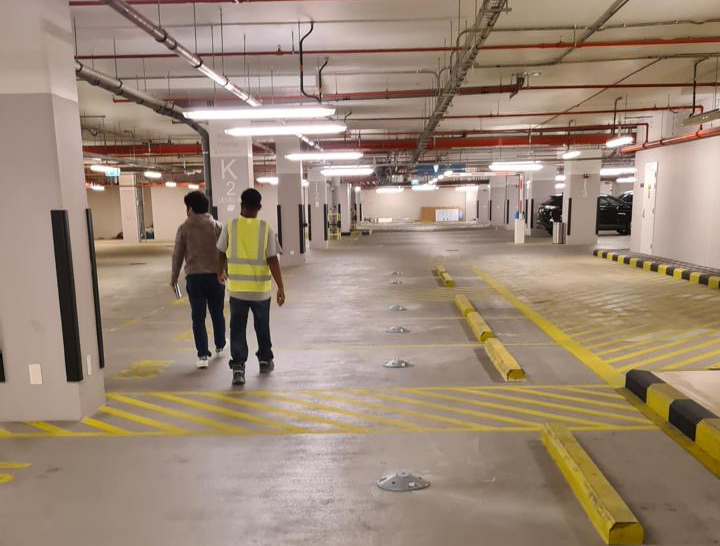
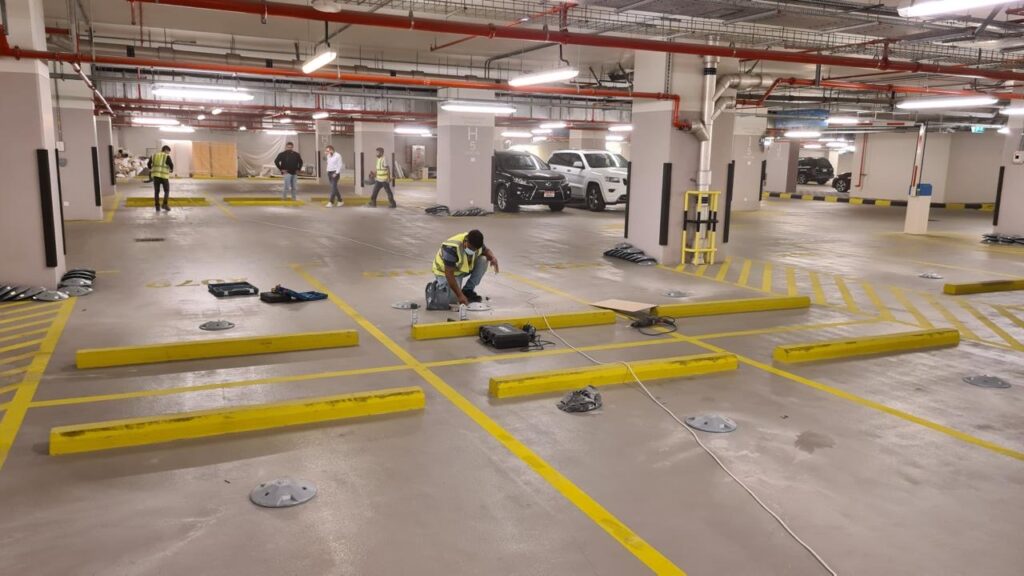
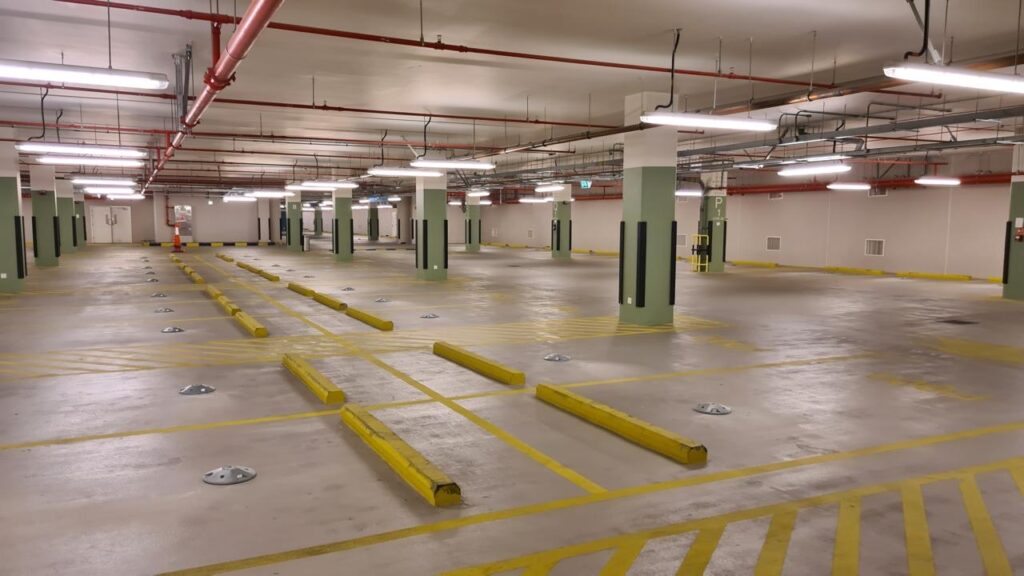
Fleximodo digitalized the campus with a single connected system. First, the team installed 1,750 IoT parking sensors, one per space, detecting occupancy through a magnetometer confirmed by radar at 99.96% accuracy. Then it issued 2,000 digital permit cards to link authorised vehicles to the right zones.
As a result, the hospital gained a live view of every space, and staff, patients, and visitors could be guided to free areas instead of guessing. For the detail on how the detection works, see how parking sensors work. To understand how the sensors, permits, and dashboard connect, read our guide to the digital parking management system.
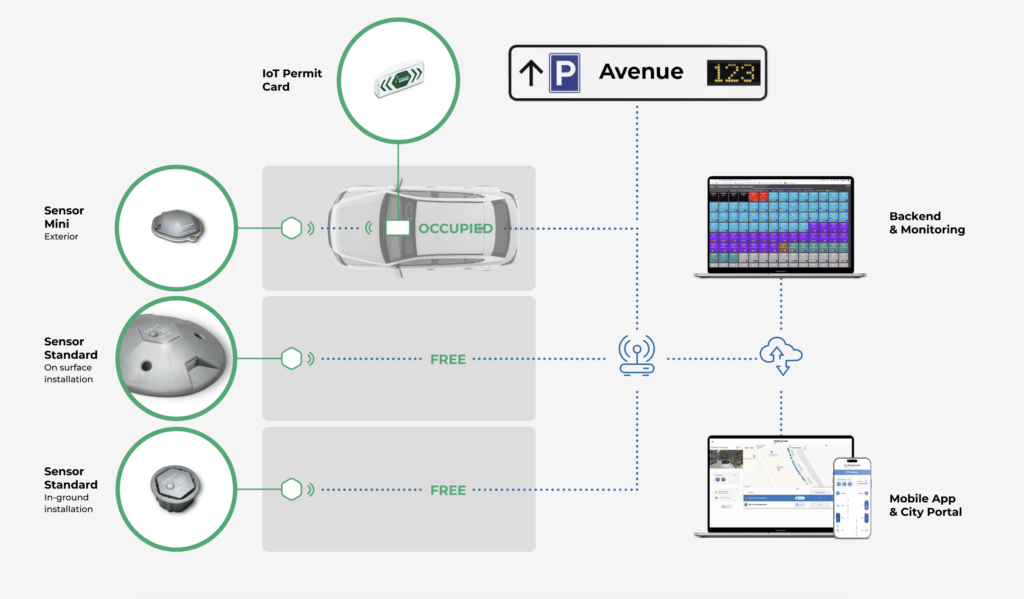
How hospital parking works
- Sensor network: IoT sensors are strategically placed throughout the hospital's parking areas, enabling precise monitoring of each parking spot.
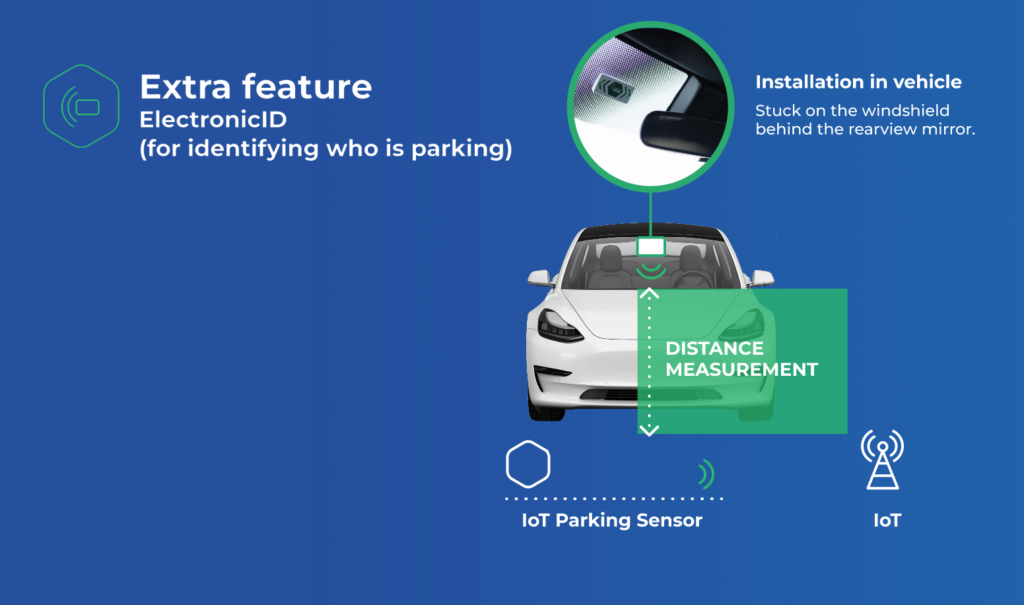
- Bluetooth cards: Hospital staff and authorized visitors are issued bluetooth permit cards. Permit cards can provide essential information like employee titles, ensuring that spaces reserved for doctors are used only by doctors.
- Real-time data: When a vehicle with a permit card enters the parking area, the sensors detect the signal and transmit real-time data on available parking spaces to a central management system.
- Guided parking: The system directs visitors to available parking spaces through signage or mobile applications.
The results
The impact showed up where it matters in a hospital: time and order.
- Faster arrivals. Because drivers were guided to available spaces, search time dropped, and the entrance stopped clogging with circling cars.
- Protected priority spaces. Permit control kept staff, patient, and accessible spaces available for the people they were meant for.
- Data-driven management. The operations team could finally see usage patterns across the campus, so they could plan around real demand rather than complaints.
What it means for the hospital parking
Here is the wider lesson. A hospital cannot simply build its way out of a parking problem, because land near a medical campus is scarce and expensive. Instead, SSMC made its existing 400,000 m² work harder by making every space visible. That is the same principle behind every Fleximodo deployment: the fastest fix for parking is better data, not more concrete.
For other healthcare and large-campus operators, the takeaway is clear. Start with accurate per-space detection, add permit control for priority spaces, and let the data run the site. See how the approach fits corporate and campus parking more broadly.
FAQ
How do you solve hospital parking problems?
The most reliable approach is to detect occupancy at every space with IoT sensors, guide drivers to free bays in real time, and use digital permits to keep staff, patient, and accessible spaces protected. SSMC in Abu Dhabi did exactly this across 400,000 m².
How many sensors did SSMC install?
Sheikh Shakhbout Medical City deployed 1,750 Fleximodo IoT parking sensors and issued 2,000 digital permit cards across its campus
Why do hospitals need smart parking?
Hospitals have constant, peaking demand from patients, visitors, and staff, and limited room to expand. Smart parking uses existing spaces more efficiently, cuts search time when it matters most, and keeps priority spaces available.
How accurate is the parking detection?
Fleximodo sensors detect occupancy at 99.96% accuracy by combining a magnetometer with radar confirmation, which is what makes guidance and permit enforcement reliable.
