by Mia Ilavska
October 6, 2026
Time Wasted Looking for Parking: The Real Numbers
The average US driver loses 17 hours a year just looking for parking, about $345 in wasted time, fuel, and stress. Here is where that time goes, why it happens, and how cities cut it.
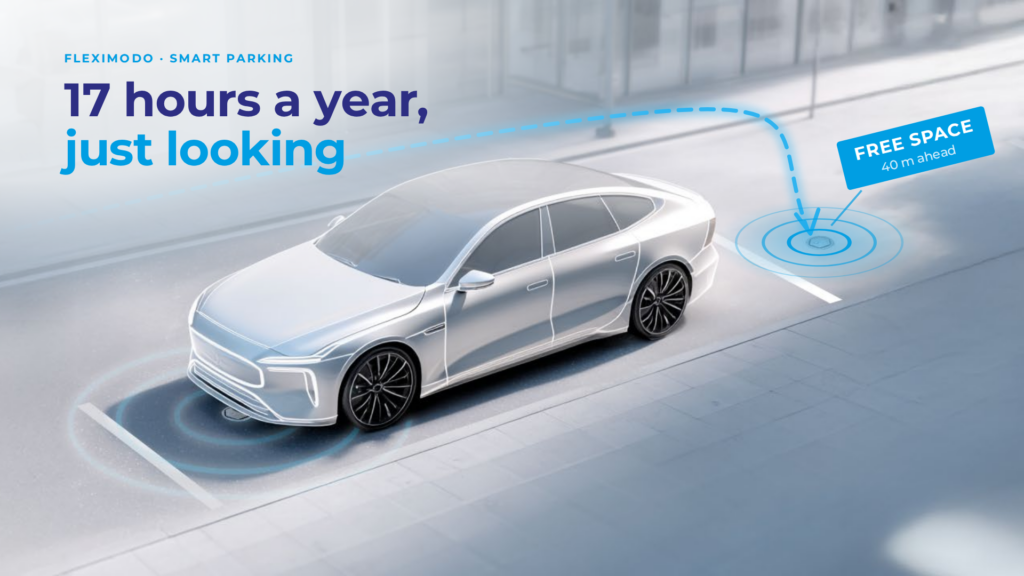
Table of content
Time wasted looking for parking, in numbers
Time lost to parking search scales with density. In quieter towns it is a few minutes per trip; in busy centers, however, it is far more. Reviewing 16 studies across 11 cities, the economist Donald Shoup found that cruising for parking made up between 8 and 74 percent of local traffic, with drivers taking an average of about eight minutes to find a curb space. In other words, eight minutes per trip, repeated across a city every day, is where the annual totals of 17 hours, or 107 hours in New York, come from.
Why we waste it
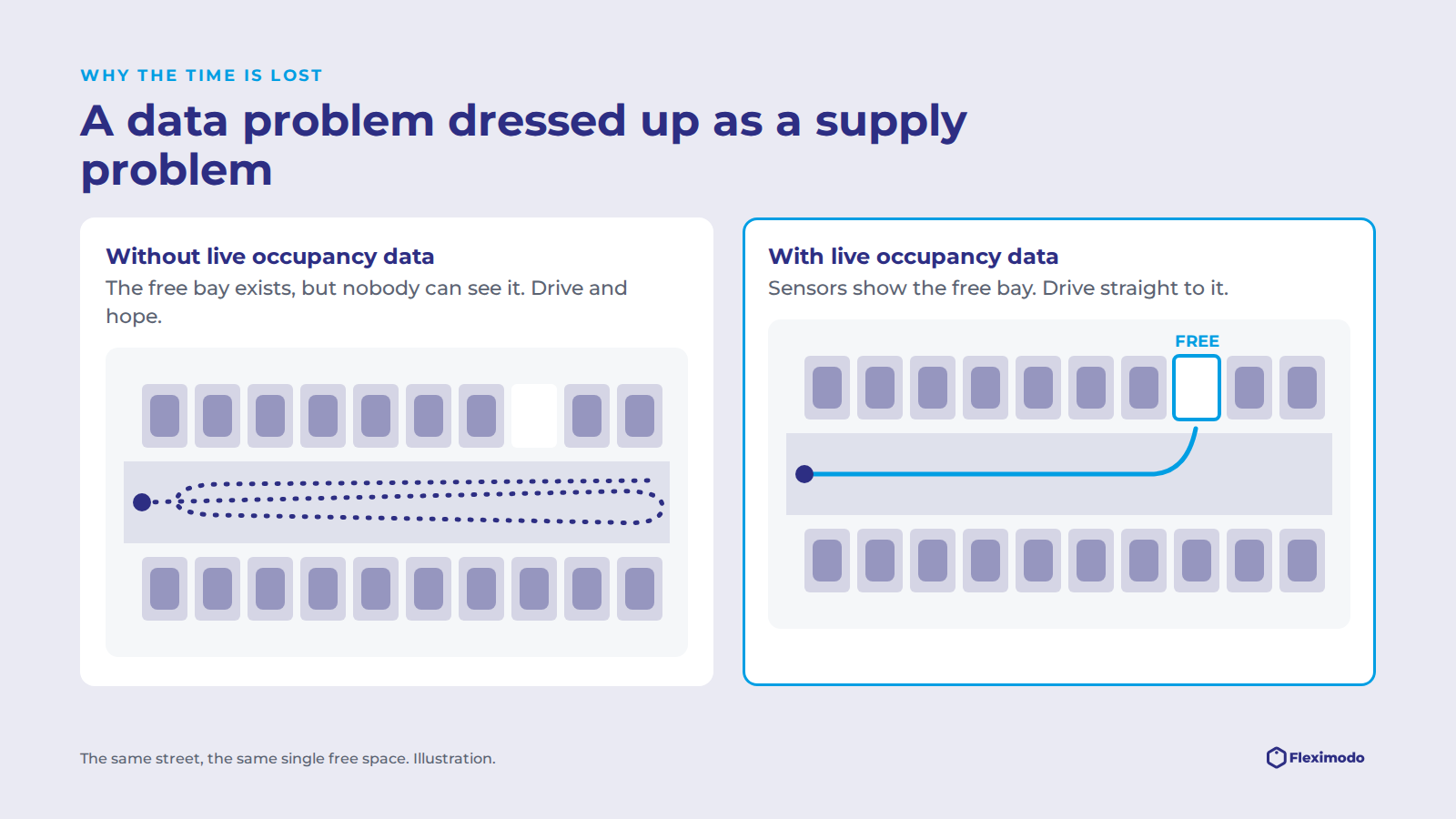
We waste the time because most parking is invisible and often underpriced. A space that is too cheap is always full, so the next driver has to circle. And without live occupancy data, a driver has no way to know which street has a free spot, so they drive and hope. As a result, cars crawl past full bays, block the lane behind them, and search for something they cannot see. It is a data problem dressed up as a supply problem.
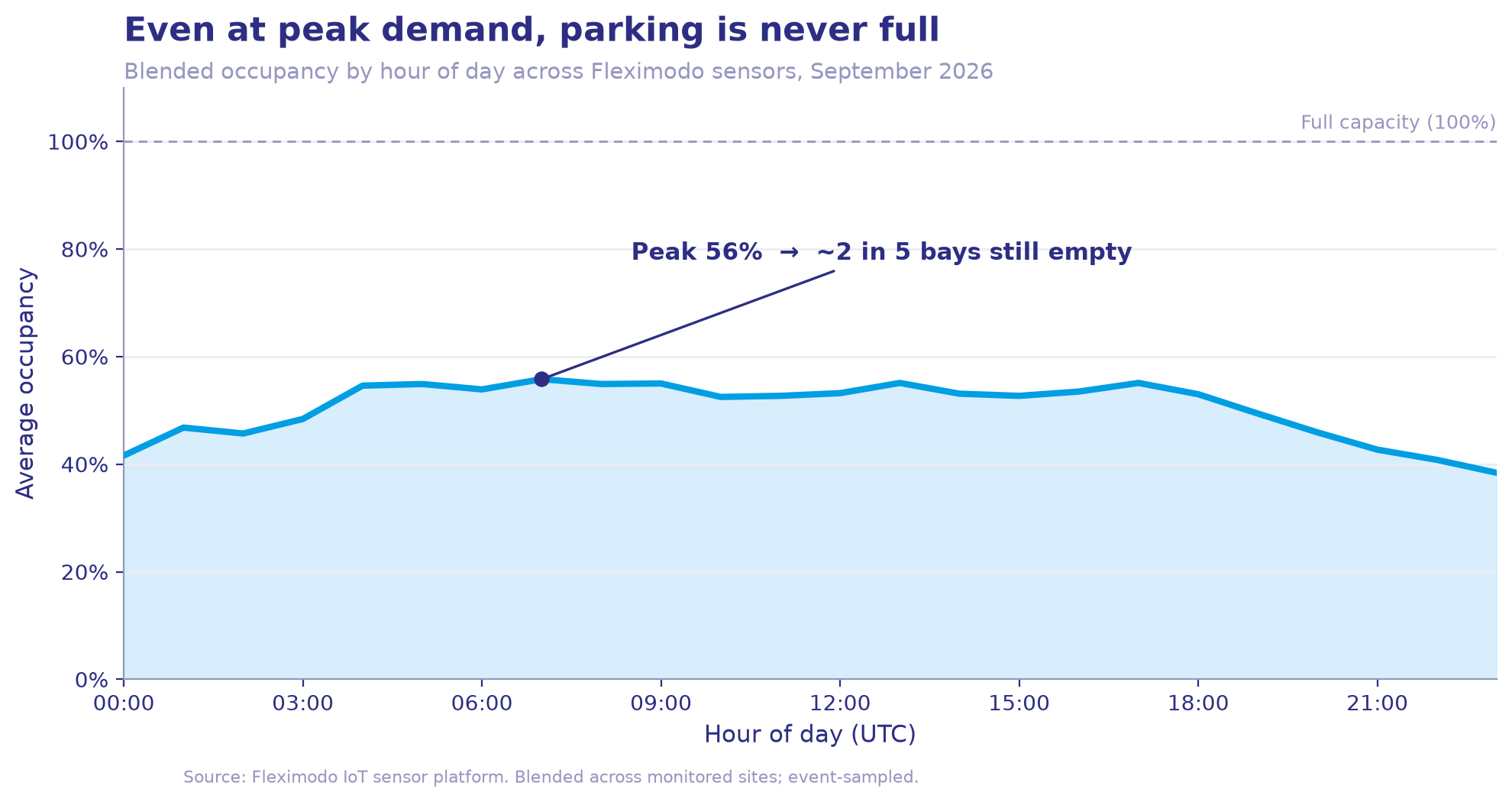
For example, we see the same pattern in our own data. Across the Fleximodo sensors reporting to our platform in September 2026, blended occupancy peaked at about 56 percent during the busiest daytime hours and fell below 45 percent overnight. Even at the midday peak, roughly two in five monitored bays sat empty. In other words, the spaces were there; drivers circling for eight minutes simply had no way to see them.
What it costs beyond time
However, the lost hours are only part of the bill. First, cruising burns fuel and emits CO2 for zero useful distance. Second, it manufactures congestion: those searching cars are extra traffic on top of normal demand. Remember Shoup's range above: on some local streets up to 74 percent of the traffic was cars hunting for a space, not cars going anywhere. So the cost lands three times over, on the driver's day, the city's air, and everyone else's commute.
How cities cut time wasted looking for parking
Cities cut the wasted time by making parking visible and correctly priced. IoT parking sensors detect which spaces are free in real time and push that to apps and guidance signs, so drivers go straight to an open bay instead of circling. Meanwhile, dynamic pricing keeps a few spaces free on every block by nudging the price to demand. Together they attack the search directly, which is why real-time guidance can cut search traffic by up to 30 percent. This is the Parking Paradox in practice: the fix for a "full" city is rarely more parking, it is better data. See traffic congestion solutions for the city-scale picture.
FAQ
How much time do drivers waste looking for parking?
The average US driver spends about 17 hours a year searching for parking, according to INRIX, worth roughly $345 each in time, fuel, and emissions. In dense cities it is far higher: about 107 hours a year in New York. Nationally it adds up to around $73 billion in the US.
Why do we spend so long looking for parking?
Mostly because parking is invisible and often underpriced. A space that is too cheap stays full, so drivers circle, and without live occupancy data they cannot see which street has a free spot. It is a data problem more than a supply problem.
How much of city traffic is people looking for parking?
Reviewing 16 studies, Donald Shoup found cruising for parking made up between 8 and 74 percent of local traffic, with an average around a third. Drivers took about eight minutes on average to find a curb space.
How can cities reduce time wasted looking for parking?
By making parking visible and correctly priced. IoT sensors show which spaces are free in real time via apps and signs, and dynamic pricing keeps a few spaces open on each block. Real-time guidance can cut search traffic by up to 30 percent.
Does looking for parking cause pollution?
Yes. Cruising for a space burns fuel and emits CO2 for no useful distance, and the searching cars add congestion on top of normal traffic. Cutting search time directly reduces both emissions and congestion.
If a city feels full, are there really free spaces?
Usually yes. In Fleximodo's own September 2026 data, blended occupancy across monitored bays peaked around 56 percent, so even at the busiest hour about two in five bays were empty. The problem is visibility, not supply.
